AI, people & possibility · Boulder, Colorado

Make AI useful.
Make people
capable.

A long background in technology and business. A fresh enthusiasm for what people can do next.

I’m Todd Beetcher. I build with AI, think about how a business fits together, and want to help people feel capable in a world that keeps changing.

I help people notice where AI could be useful, get started with something that matters, and learn how to keep going. In a business, a school, or a conversation with someone who isn’t sure where to begin.

Start with something I built
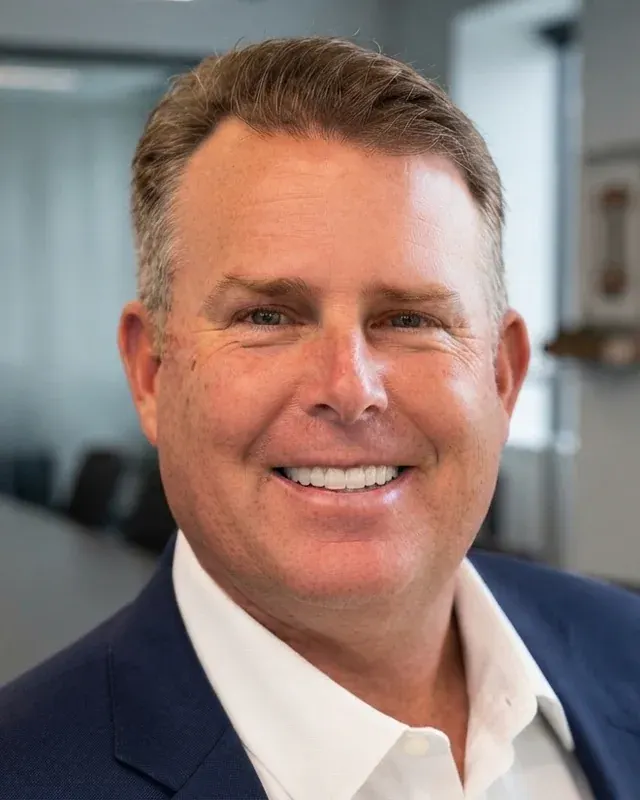
Todd Beetcher smiling, wearing a navy jacket and white shirt.
A builder’s curiosity.
A lifetime of showing up.
01 / THE WORKAn idea should become something you can inspect.

A new city shouldn’t
mean starting
from scratch.

A practical problem in expanding an AI workshop became a substantial application.

If an instructor becomes available in another city, where could people meet? Repeating venue research and data entry for every new territory would make expansion cumbersome.

I built a console that lets an operator choose a territory, specify the kinds of places to find, and use AI to propose candidates. Reviewed venues become permanent inventory the operation can use.

That discovery workflow connects to a larger system for people, classes, instructors, attendance, and communications. The important part is how the pieces work together.

AI suggestions arrive inactive. A person reviews them before activation. The system includes source tracking, prompt versions, run history, and spending controls.

See the system and the decisions
LAUNCH / VENUE DISCOVERYHuman review
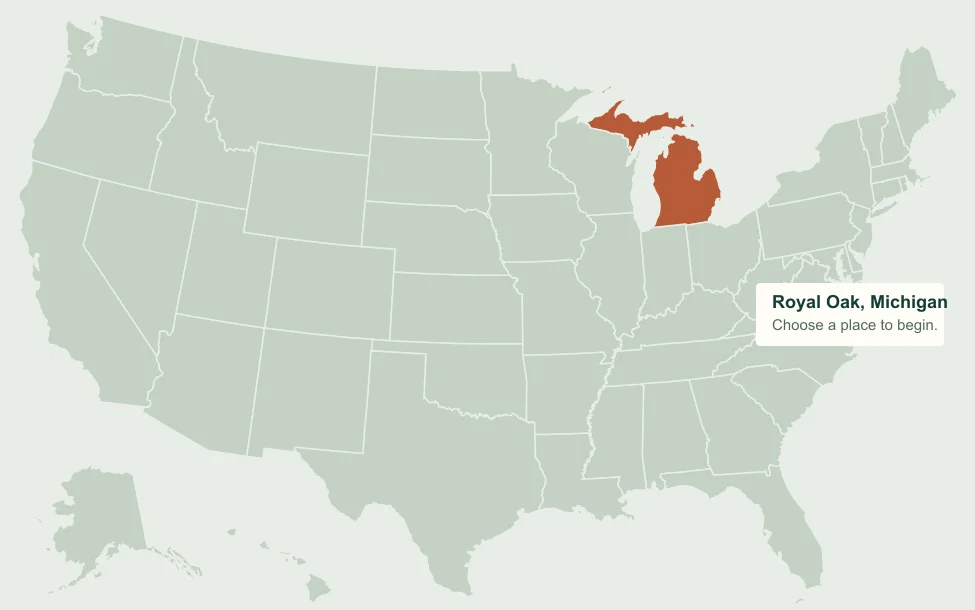
A United States map with Michigan highlighted, illustrating Royal Oak as one possible starting territory.
Choose territoryDiscoverReviewUse inventory
Workflow schematic based on the implemented system.
Different territories. Configurable searches. Reusable machinery.

The range is part of the point.

A backend console. A brisket for friends.
The same willingness to figure things out.

NEEDS TODD RAW SIGNAL · More examples across everyday and technical life

You mentioned a doghouse, researching a health question, designing a website, and a CRUD handler. Add the specific episode, what you did and checked, and an artifact if available. We’ll select the strongest examples rather than imply every idea is already a completed project.

02 / PEOPLE I HELPCapability becomes more valuable when you can pass it on.

I can do it.
Let me help you
find your way.

Building something myself is one part of the story. Helping someone else take their next step is another.

This summer, I mentored young people through Silicon Flatirons. I’ve also spoken to young people at the Beck Center in Golden. These are the moments I want to show you: a question, a conversation, a possibility someone hadn’t seen.

Whether you lead a business, teach a class, or mentor students, you should be able to picture what learning with me could feel like.

NEEDS TODD RAW SIGNAL · RS01 / RS08

A summer conversation.
A different next step.

Silicon Flatirons · Startup Summer 2026

The mentoring moment belongs here, in your own words. Where did the person begin? What did you help them see? What did they try or do next?

Add the memorable exchange, the action that followed, and anything you learned later. A photo, note, or piece of their work can sit beside the story.

The program name is confirmed. Your story will establish the particular session or event.

NEEDS TODD RAW SIGNAL · RS02 / RS11

Make the unfamiliar
feel approachable.

Beck Center · Golden · Exact occasion to confirm

Your talk belongs here. What were the young people curious or uncertain about? What example, explanation, or question helped the idea land?

Add the occasion, what you shared, and a response you actually observed. Slides, a photograph, or an organizer’s note could give readers a closer look.

Speaking and mentoring show different strengths. We’ll let each real story reveal its own value.

03 / RECOGNIZING THE MOMENTThe person stays in charge.

The next time
something gets
in your way.

Knowing AI exists is different from noticing when to reach for it.

A useful first experience is a beginning. The next step is recognizing the ordinary moment when help could make a difference: something confusing, repetitive, unfamiliar, or simply worth understanding.

That is the habit I want to help people develop. Choose something that matters to them. Help them make progress. Then help them recognize the next opportunity themselves.

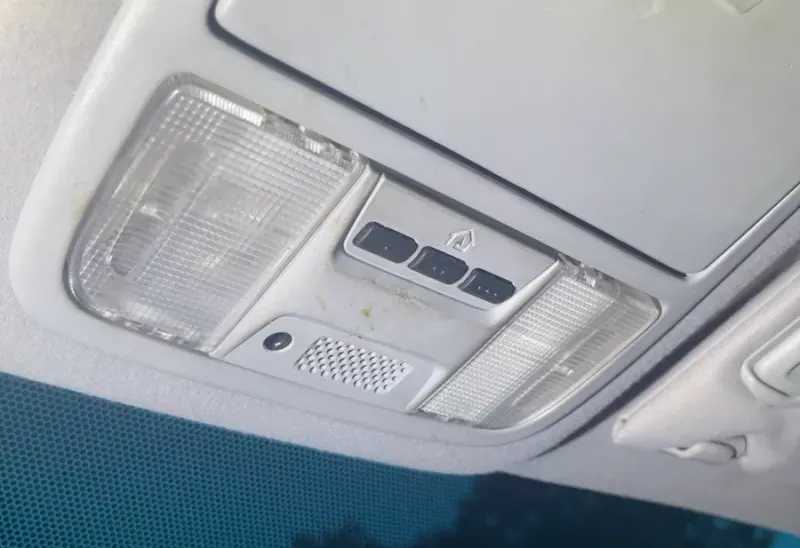
The overhead dome-light assembly in Todd’s Honda Pilot.
An ordinary problem I had stopped questioning.

The light had been broken for years.

Then I thought to ask.

I’d lived with a dead dome light in our Honda. One day I thought to describe the car and show the assembly to my AI assistant. I could start working out what I needed to understand.

The important change came before the answer: I recognized a problem I could now approach differently.

  1. 01

    Notice.

    What’s getting in the way? Is this a useful place to ask for help?

  2. 02

    Frame.

    Describe the goal, the situation, and what you don’t yet understand.

  3. 03

    Try.

    Take one manageable step toward something that matters.

  4. 04

    Check.

    Question the answer. Verify what matters. Keep your judgment.

  5. 05

    Return.

    Recognize the next opportunity, with greater independence.

A brisket for friends, a website, an unfamiliar piece of code: the setting changes. The willingness to learn can travel with you.

At work or school, that also means appropriate tools, clear information boundaries, and a person who remains responsible for the result. Sometimes the right choice is to leave AI out.

NEEDS TODD RAW SIGNAL · How you teach the habit, and what happens afterward

Add your natural explanation, a moment when you adapted it to someone, and any later independent use you observed. The sequence above is a proposed way to explain the approach; it is not a claim of measured learning outcomes.

04 / EXPERIENCE & JUDGMENTExperience gains a new kind of reach.

The background
is long.
The curiosity is current.

I began in programming and chip design, then spent decades across technology and business. AI brought me back to hands-on building in a very different environment. I had plenty to learn.

The useful continuity is systems thinking: understanding the people, incentives, economics, technology, and relationships around a problem. A good first move should make sense within the larger business.

I also prepared an independent presentation about NOCTI’s proposed AI-readiness certification initiative. It explains how a shared standard could connect workforce preparation and employer confidence, and invites founding-sponsor conversations.

That same interest—understand the system, explain it clearly, help something useful happen—is what I would bring to learning your organization with your people.

How I think about the business
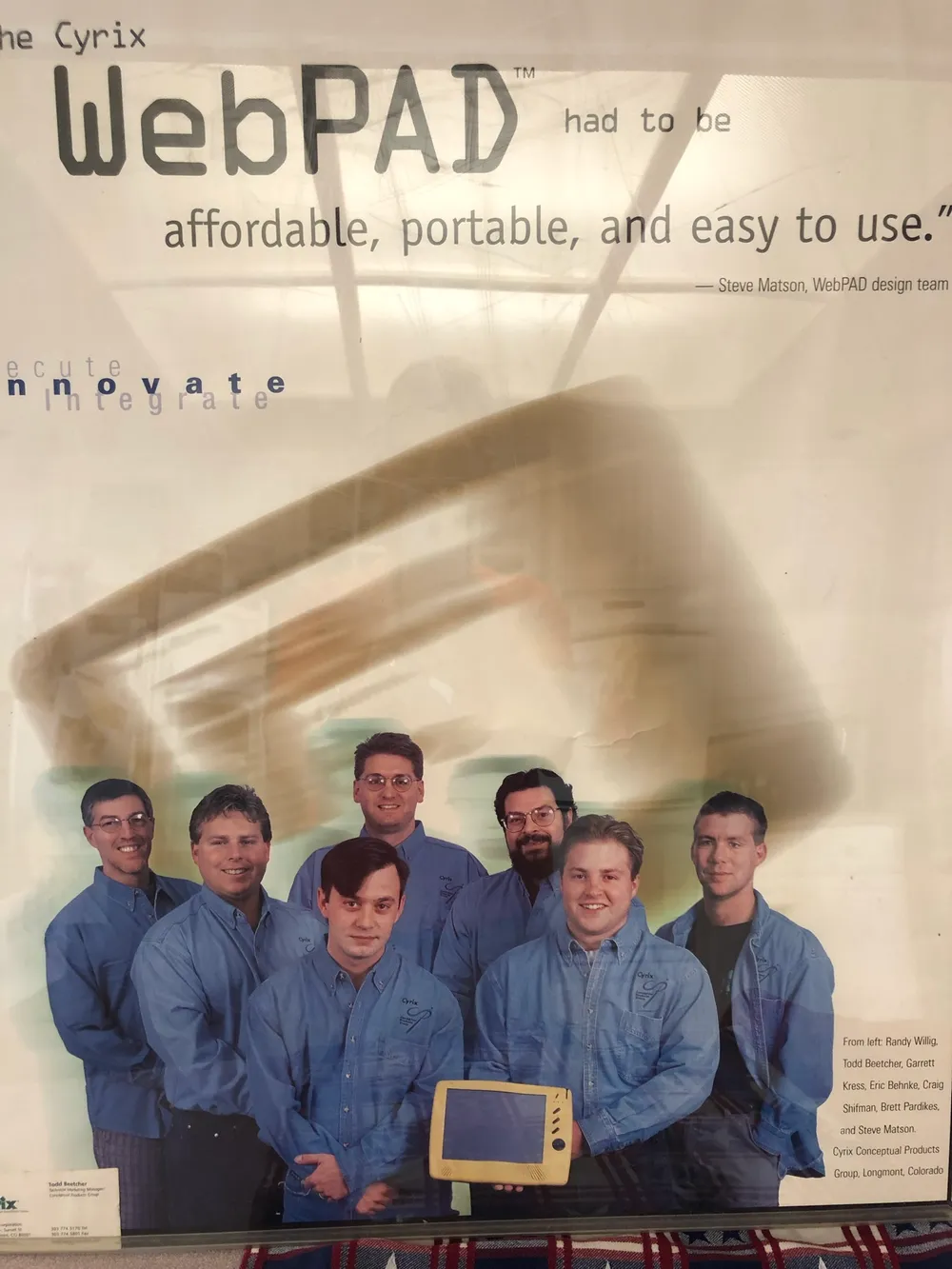
The Cyrix WebPAD Conceptual Products Group in Longmont, Colorado; Todd is identified second from left in his existing archive.
Cyrix WebPAD Conceptual Products Group, Longmont, Colorado.
Todd, second from left. From my existing archive.

An earlier chapter / WebPAD

I’ve been imagining what comes next for a long time.

In 1997, Forrest Norrod handed me the problem that became the Cyrix MediaGX/WebPAD story. I shared that story, along with ZUM, BOCS, and THUMP, in “Seeing Around the Corner,” a guest talk for Stan Hickory’s Intro to Entrepreneurship class at Colorado School of Mines.

The collision of advancing technology with evolving human behavior and rituals creates moments of opportunity for innovation.

The eight-page PDF pairs each slide with my full speaker notes.

05 / THE PERSONThis is the same guy.

Showing up lives
in the details.

When I drove school-bus field trips, I contacted the teacher ahead of time. I brought water, picked music for the group, and sent a thank-you note that evening. Sometimes there was an actual red carpet at the bus door.

I like making people feel that someone thought about them.

Suzanne and I raised two daughters in Boulder. Family, sport, being outdoors, cooking for friends, making and fixing things—those are a large part of the life behind this work.

AI has given that curiosity new reach. What I enjoy most is having something useful to offer the people around me. I’d like the people I work with to experience that feeling too.

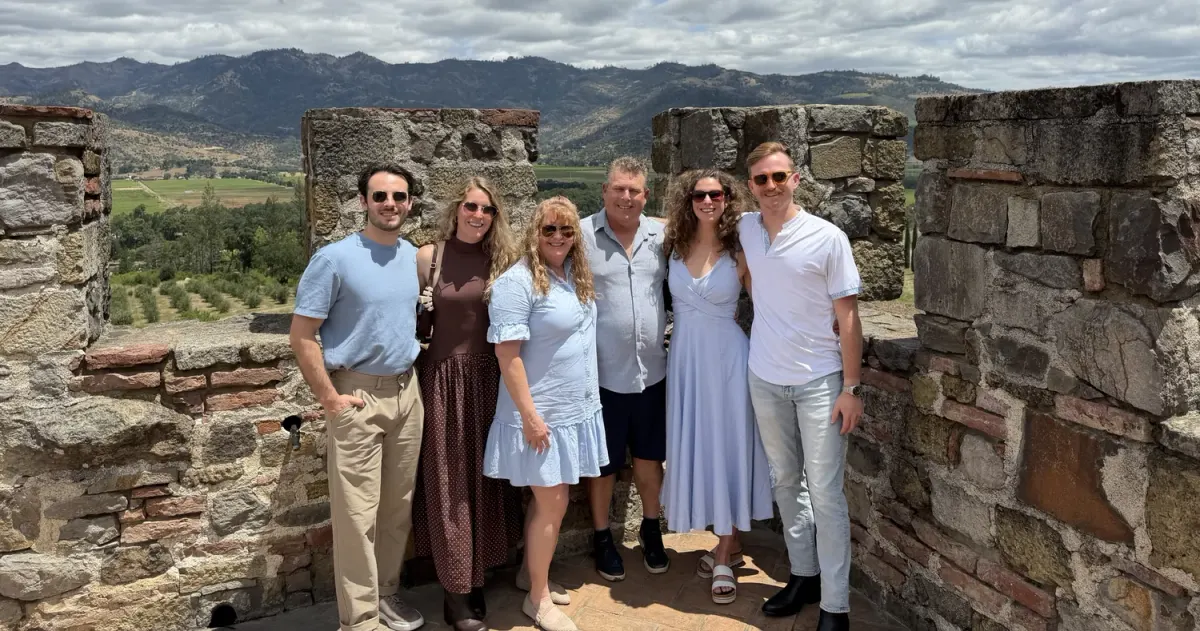
Todd with Suzanne and their family on the stone ramparts of a Napa castle.
Family. Still the center of it.
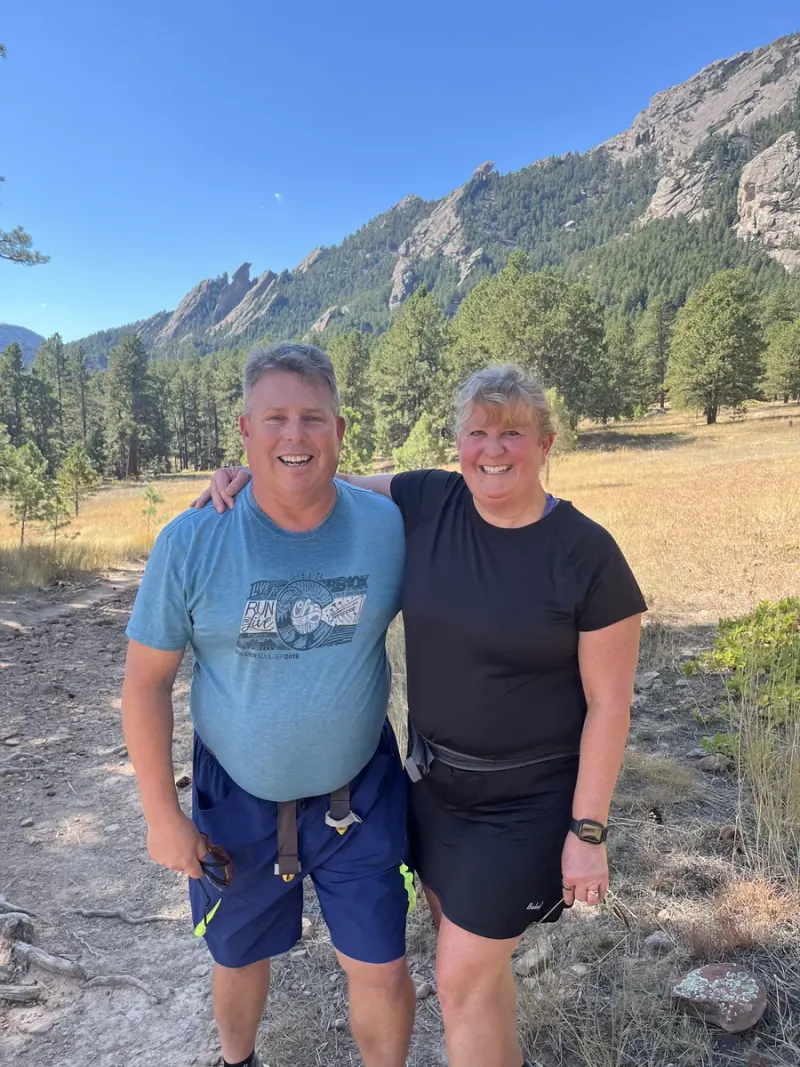
Todd and Suzanne smiling together on a trail below the Boulder Flatirons.
Still hiking with my 1984 crush.
06 / STARTING HEREA beginning shaped around your organization.

First, I’d walk around
and meet people.

Before deciding what should change, I’d want to understand the people doing the work—or the learning.

I’d listen to what they’re trying to accomplish, where work gets stuck, what they already use, and what makes them curious or uneasy. I’d learn with the managers, educators, and technical partners who know the setting.

Early in the week, I’d show examples from inside and outside work, then help people establish a usable AI environment within your tools and information boundaries.

I’d focus on recognizing opportunities and experiencing a useful first result. An end-of-week workshop could bring their questions and discoveries together and point toward useful applications in their own setting.

Then we’d select a few opportunities, agree on owners and what improvement would look like, and support people as they try again. We’d return to what got in the way, adjust the approach, and see what actually helps. The sequence would adapt to your organization; the first week is a launch, not a promise of transformation by Friday.

  1. CAPABILITY

    Can people recognize a suitable opportunity, explain what they need, try it, and check the result?

  2. CONTINUED USE

    Do they return on their own? Do they have usable examples, time to practice, and someone to ask when they get stuck?

  3. USEFUL WORK

    Does the chosen workflow improve—in quality, time, service, or another agreed measure?

NEEDS TODD RAW SIGNAL · Help that survives the session

Add a guide, a follow-up conversation, a later attempt, or a changed practice you actually observed. The first-week and continuation sequence is a proposed approach, shaped around the organization.

The next step is a conversation.

Can you picture this
with your people?

I’d like to hear what you’re trying to make possible.
A direct conversation or an introduction is a good place to start.

Let’s talk

A letter from Todd

AI arrived. I dove in.

Hi, I’m Todd. I’m glad you’re here.

I’m bringing decades in technology, business, and life into work I want to do: helping people and organizations find their way into the AI era.

When AI arrived, I wanted to understand what was underneath it. Then I dove in and kept swimming—building things, asking questions, getting stuck, and learning how to steer. As I stepped back and looked at what I was doing, I recognized a common thread: I was learning how to participate in this transition, and finding ways to help other people participate, too.

The technology keeps advancing. For someone still wondering where to begin, every announcement can make the mountain look bigger. You can be an accomplished person, responsible for a company, a classroom, or a family, and still feel uncertain about your own first step. It can be uncomfortable to say that out loud.

You don’t have to keep up with everything to begin.

One of the most important things I want to help people learn is recognizing the moment when AI could help. Something is confusing, unfamiliar, repetitive, or simply getting in the way—and you remember that you have another place to turn.

That recognition can become a habit. You ask, try something, question what comes back, and learn when to reach for assistance again. Your judgment develops through that experience. You remain responsible for what you accept, what you change, and what you do next.

I’ve experienced this while building software, cooking a brisket for friends, and figuring out a light repair I’d put off for years. Different situations, connected by a growing ability to approach something I didn’t already know how to do.

Helping someone else discover that capability is where I want to contribute.

For an adult beginning with AI, that might mean a useful first experience through LAUNCH, the learning program you can explore at Enjoy. For a young person, it might mean developing the confidence to investigate an unfamiliar subject while retaining their own thinking and judgment. In mentoring, it can begin with listening carefully enough to help someone recognize a possibility they hadn’t seen.

For an organization, the work extends into how people, disciplines, information, and operations connect. AI can change the pace at which ideas become working things. Making that useful takes business understanding, hands-on building, communication, and human judgment about what should happen—and why.

This site brings those interests and activities together. You’ll find my background, software you can inspect, learning experiences I’m developing, mentoring, writing, and an independent presentation about a proposed AI workforce-readiness certification initiative. Some work is built; some is being developed. I want you to be able to see both the substance and the direction.

Follow the short story, then go sideways wherever something interests you. Each path explains what I’m working on, why it matters, and gives you something deeper to explore. Along the way, you’ll also meet the person behind the work.

Your journey will be different from mine. So will your company’s, your school’s, or your family’s. If something here connects with what you’re trying to make possible, I’d enjoy a conversation.

Todd
Let’s talk